Showing posts with label joey's mom. Show all posts

Thursday, April 26, 2012

Joey's Mom: Lois

Joey's Mom introduces us to a wide cast of characters in her photographs and stories on Flickr. Some pop up in one photograph and others prove their lasting legacy through multiple photos over the years.

What I love about Joey's Mom's friendship with Lois is that it was borne out of something dark and scary, but grew into such sweet friendship, the kind of friendship that says, "You're having a baby? I will have one too!" Such dedication and loyalty is hard to come by.


Lois appeared in my life through misfortune. Hers. For me, meeting Lois was a lucky break.

"Why don't you ask Mrs. M. out to lunch soon?" my employer asked when Lois left after her medical appointment. "She's a nice woman and is quite ill. She's going to need surgery, but I can't schedule it yet. She has problems at home too. She needs cheering up."

I noticed she trembled alarmingly when filling out forms and she seemed extremely nervous.

We met at Hattem's for lunch, a popular restaurant on, or just off from Grand Rapids' South Division Avenue in 1949. The waitress asked "Cocktail? Tuesday special for 49 cents!" We sipped Manhattans while awaiting our food. It would become a hallowed ritual to meet on Tuesdays for lunch and have a Manhattan, whether on South Division Avenue or Hattem's successor on the eastern fringe of the city in later years. Or in other cities and days as our lives changed over the years. What was most constant over time was our friendship.

Conversation came easily from our first meeting, though neither of us is a chatterbox. We discussed anything we chose without fear. Soon we were meeting in each others' apartments on weekends or evenings to exchange hair coloring or perms. Clothing purchases were never final until the other had approved. We traded recipes. She read her correspondence to me and we discussed personal matters freely. Our harmless crushes; hers on a handsome Resident at the hospital who paid her special attention, mine on a photographer I knew. We were privy to each others' secrets and nothing went further than our lips.

I visited her in Butterworth Hospital after she had her toxic thyroid gland removed. I wore a royal blue velvet car coat. When Lois admired it I said casually "Yeah, it's very comfortable; I've had it forever." She asked me why it had a white label stapled to the hem in the back. Blushing, caught in in my lie, we both laughed loudly, she as loudly as her stitches allowed.

I'm wondering now if the pearl choker she's wearing in this beach photo covers her surgical scar.

Dr. Pott's diagnosis and surgery brought calm and health to Lois. I showed her the work ritual on my job; soon she filled in for me when I vacationed or was ill, with the doctor's complete approval. Liking to have some money of her own, she began selling Avon products and confided funny or sweet stories of her customers to me. When I entertained, she would suggest she personally go over my apartment that afternoon while I was at work. She wasn't above wielding a dust-cloth or Windex bottle if needed.

Me too!


I told Lois first about my coming motherhood. In a rare and touching act of friendship she announced, "If you're going to have a baby, then I will too!" And she said she would give me a baby shower.

By the time of the shower she was able to announce her own due-date, three months after mine. How about that?!

Ottawa Beach family outing


It was inevitable that our families would enter our world. As I explained before, many Grand Rapids residents streamed to Holland's Ottawa Beach on weekends.

I soon introduced Lois to the smorgasbord of enjoyable summer activities in Chicago too, just a few hours' ride away on the Chesapeake and Ohio Railroad.

Hubby slows down


Lois' husband, Jim, was more of a power-boat guy, but here he enjoyed an
afternoon on the sand with us.

Beaches by the mile


Lois and I decided on a late summer vacation together before our heavier responsibilities set in. We hopped a morning Chesapeake and Ohio train from Grand Rapids to Chicago, arriving early enough to get settled in at the New Lawrence Hotel on the near north side, where we had stayed before. We had dinner in a neighborhood deli, then saw a play -- unmemorable, apparently!

In the morning we headed for the nearest beach, where I took this photo of Lois. We never tired of being in the sun, and neither of us worried about our skin. We hadn't heard of sunblock, although some people smoothed on Coppertone or other oils said to enhance their suntans. We didn't.

The Chicago beaches were lovely and uncrowded in the 1950s, as my photo of Lois depicts. They stretched for miles along Lake Michigan, almost continuously, for close to 30 miles. City-owned and maintained, with parking and restrooms, each had its own character. One is near the Lincoln Park Zoo, one near the Adler Planetarium, another is near the Shedd Aquarium. I heard that one has a dog park now, and that smoking isn't allowed anywhere. That would have given Lois pause, with her ever-ready pack of Marlboros. We frittered away the day there happily, sharing stories and soaking up the sun. She gave me advice on baby formulas, told me how to sterilize bottles and shared some exercises to restore the body post-birth.

The next day, feeling a little guilty about our prior frivolity, we headed for the Art Institute. Nearby shopping in the Loop beckoned next. Since Marshall Field's had everything, we went there, heading to the top floor where we looked over the atrium railing at the shoppers on on street level. In the Walnut Room, we ordered one chicken potpie and one Marshall Field's sandwich, trading tastes back and forth. I doubt that Macy's continued that menu option after the buyout in 2005!

After lunch we set out with purses in hand, sans plastic (how did we ever manage?), and, following a long-time Loop tradition, agreed to meet "under the clock" should we lose one another. The massive and ornate timepiece mounted on the building's State and Washington corner is more than a clock to Chicagoans.


Weighing the baby


Lois came through with her promise, and Mike was born three months after Joey, in early 1954.

Here, she visits Dr. Pott’s office for a baby checkup and weighing. I trotted upstairs to my apartment to get Joey from Bernadette, his sitter, and snapped this photo. I think Joey would have broken the new-baby scale by that time. Little Mike soon outstripped Joey in size though. Their lives took different routes, as Mike became interested in extreme sports. Joey was bookish and thoughtful.


Departures


It was lunchtime, so we asked Dr. Pott to take our photos with the babies in Mrs. Pott's garden outside.

I did some Internet sleuthing and learned that Lois' “baby," Mike, had died suddenly, only 49 years after this photo was taken, in apparent good health, of a massive heart attack. His adored mother was already gone, and his father died shortly after.


The good daughter


Lois enlisted her little daughter's help in serving the desserts. Here she takes the coffee pot to the living room. Cheryl later became a teacher, and retired recently as high school principal.

While teaching, Cheryl became a specialist in smoking cessation and prevention. She traveled from school to school, her primary target from the beginning actually being her mother, a lifetime smoker who could, and did, do anything in the world for her family except stop smoking.

During a visit to her Hospice room in Lois' last days, she seemed asleep. So I sat at the little table with her husband, who talked about his fast cars, speedboats, football prowess, etc., in such a loud voice it made me ill. I wanted desperately to tell him to SHUT UP. I didn't comment or ask questions, still he persisted in his flat, booming voice. I went to Lois' bedside`and put my hand on her forehead. That's when she opened her eyes and said to me soundlessly, "Help me."


If you're new to Owl Really, welcome! Please check out my favorite posts and consider subscribing! :)

Thursday, April 12, 2012

Joey's Mom: Photography


Have you wondered how Joey's Mom developed her love of photography? We find out below!

If you've missed any of our Joey's Mom series, see them all here and click through the photos to see more and to read the original versions of her stories.


This could just as well have been captioned "Our Wedding Night or How a Bad Photo Resulted in a Lifetime Hobby!"

Jerry's German camera turned out maddeningly random good or bad photos. Of course it was because we didn't know about setting it for distance, let alone shutter speed and f-stop. We posed this morning after our wedding in front of the hotel where we spent the first night of our married life. The picture turned out so badly I was motivated later to take the camera back to a store to learn how to operate it and was sold a light meter. The rest is history: the beginning of better photos and a lifetime hobby.

(Read a very classy and humorous story about the wedding night here!)


Mom's First Darkroom

In the late 1940s, we purchased a light meter to use with the folding German camera Jerry brought home from World War II, and it improved our photos. I took one or two informal little evening classes on photography at a camera shop, furthering my interest and ability.

Then one day Jerry said he met a man through business, Roger Verspuit, who had a darkroom and we were invited to watch him develop and print photos. We went and observed. Seeing images appear in the tray in the reddish darkness sent me reeling. My heart was pounding; I HAD to do that! Approximately 12 hours later I bought my basic darkroom needs. Those items are with me and usable still, having rotated from me to son and back again, first with my own attention taken by children and husband, then Joey's move to digital camera and Photoshop.

My employer, the neighborhood physician, did business in a large old brick mansion. The main floor had a big bathroom in the back adjacent to our pharmacy room. The tub had been removed, the room had a smooth maple floor, a telephone jack, and of course running water! As though planned for my use, there was a walk-through closet to the room from our diathermy suite, providing a light lock. After a quick OK from my boss I used a handy old porcelain-top table for the developing trays and contact printer, and placed the safety light on a towel bar over the trays. The office was flush with brown medicine bottles, and I saw their potential for Dektol, etc. I may have emptied some prematurely.

Holding a book in one hand and concentrated solutions from the camera store in the other, I mixed the magic potions in my little room of miracles. Then, feeling goose-bumps of anticipation, I would read a paragraph under the safelight, expose the paper to negative, and quickly consult the book again. Dunk paper in developer, watch images appear, then transfer the photo to acid stop and fixer, poking the book under safe-light with shaking hands after each step those first few times. It was exciting and thrilling beyond imagination!

Aside from Roger's evening demonstration, there was never another lesson or help. Later, I joined a prestigious camera club, which furthered my interest and honed my skills.

I never saw Roger Verspuit again. His little act of kindness and darkroom hospitality set in motion satisfying hobbies for at least two people. Wherever you are, Roger, I salute you!


My darkroom quickly evolved from a temporary enamel-topped table setup to a real counter 10 feet long with black inlaid-linoleum top. Black-lined drawers held photo paper. Cupboards above kept chemicals neat. The counter was built at desk height so that I could sit while printing. Jerry did it all. A stenographer's chair allowed me to scoot from printer or enlarger to tray to tray to tray. Jerry was teaching himself woodworking as I was learning photography. Since I didn't notice anyone teaching him, maybe he was holding a book in one hand while sawing with the other! However he did it, he became an expert and the doctor didn't mind having nice cupboards built into his back room.

I painted the room a dark rosy red and made traverse draperies of black to cover the one window. It was a warm womb for long Saturday afternoons with the Met playing softly on the radio. I totally lost track of time with the birthing of amazing black-and-white photos. Each was a miracle, over and over again. I'm as fascinated with them today as I was 56 years ago.

The 4x5 I am pulling out of the fixer in the photo above showing a gal in her black bra, was Rose Bottegal, the wife of Jerry's Army buddy Aldo. He and Rose visited us in 1949, and while on the water in a rowboat on a steaming day, Rose shed her blouse. Wearing just her bra, she said "Just make believe this is a swimming suit top."


The doctor loaned me his Argoflex until I purchased my own camera. An artist himself, he painted in watercolors and oils at an easel in his wife's sunroom. So he followed my development in photography with interest.

Here the doctor edits 16mm film he shot on an extended summer vacation driving from Michigan to the West Coast with his family on Eisenhower's emerging interstate highway system. Of course they visited Yellowstone Park.


Camera store personnel in the 1940s were photographers. A customer could expect to have a serious conversation with a salesperson regarding any of the products offered from film to cameras of any price, lenses, enlargers, developing chemicals, floodlights, tripods, anything they sold. They could discuss technique and their advice was solid; they lived and breathed photography. A store was apt to have an old hobbyist or two passing time, entering conversations between clerk and customer, and offering advice as well, usually good!

The owner of Fuson's store had been a well-known portraitist, teaching his skills to his daughter who then probably surpassed him. He introduced her to me in his store one day as he explained the different surface textures of photographic papers, the tones, the contrast numbers, et cetera.

Evelyn added her own take on certain papers, we chatted and eventually she told me about a new camera club she was forming, to be for serious hobbyists. I was interested and became part of the group which we democratically voted to name the "Camera Art Club." The club was to provide a great deal of help and inspiration to this budding photographer. Evelyn especially was generous about sharing her knowledge. She demonstrated how to take a portrait if only one photoflood was available. I went home and posed Jerry. This photo, taken in 1949 became one of my favorites of him.


I invited the Camera Art Club to Hickory Hill, my parents' farm, in August 1950. It was no longer a working farm, but the photographers fanned out and found interesting possibilities in my childhood swing, old farm machinery, and rustic fencing. My mom and dad were gracious but unobtrusive, and no one suggested they do an American Gothic pose. The day was overcast and without sparkle, not consistent with our usual luck in the weather.

The darling Chicago model was only 13 years old (so says my 56-year-old pencil jotting on the back of the print).


The Camera Art Club hired Jerry and paid him the standard modeling fee of $25 for an evening's work. He was cooperative and seemed to enjoy the group -- and they him. This is the photo I took that night in 1950.


If you're new to Owl Really, welcome! Please check out my favorite posts and consider subscribing! :)

Thursday, April 5, 2012

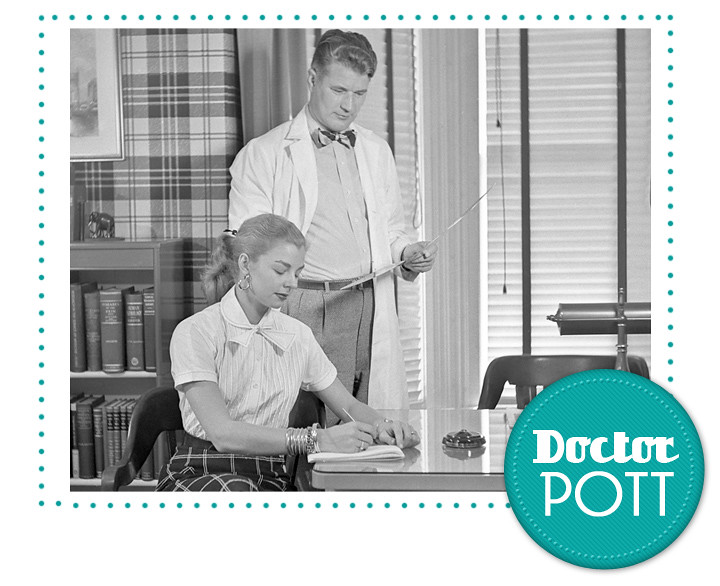
Joey's Mom: Dr. Pott

Each Thursday, we take a look back at Joey's Mom amazing photography and stories. Take a look at previous posts here!

Joey's Mom worked as an assistant to their local doctor, Dr. Pott. She tells how she got the job and details some of the adventures below. Please note that you can click the photo to view them larger on Flickr.


Jerry felt strongly about patronizing businesses in our neighborhood. So it is that we patronized the new doctor who set up his office nearby upon his return from World War II duty. His office building was a former residence in the Italian villa style — very similar to Jerry's Barclay Street house. It was just three doors east of Jerry's business and five or six doors from our apartment above the Unclaimed Freight Store.

A few months after settling into marriage, a commotion on the street below our apartment sent me to the front bay windows. I saw the aftermath of a collision, the arrival of police, bystanders clearing the way for the doctor carrying his black bag, traffic backing up on the business street (which was also a state trunkline), and folks running up to gape. I didn't recognize the doctor. It was not unusual that he was summoned because his office was nearby, and emergency rooms weren't part of the culture to the extent they are now. Of course no one had a cell phone to call for an ambulance either. A good thing. They were often owned by funeral directors.

On a later day the doctor knocked at our apartment door at mid-morning. "Remember me? Dr. Pott? I did your marriage blood tests." He said my husband approved his asking me to mind his telephone that day as his assistant hadn't appeared and he was swamped.


A day's tryout turned into years. In fact, my job with Dr. Pott roughly coincided with my marriage to Jerry. I think Jerry snapped this photo after work one day when I showed the office to him and pretended to receive a call.

Work began easily, with ample time to treat each of the neighborhood patients with care. The charge was almost always $3, and nearly everyone paid in cash. Dr. Pott always had a fat roll of one dollar bills in his pocket. Those who "charged" received a statement in the mail, which I hand-typed on a small portable typewriter at the beginning of each month.

The doctor taught me how to give injections, take blood pressure, assist with minor office surgery, give diathermy treatments, take basal metabolism tests, do urine analysis tests for sugar and albumin. Most patients appeared with a bottle of urine and all was faithfully tested; patients would telephone the next day for a report.

In spare moments Q-tips and swabs were handmade, bandages prepared, the rubber gloves were powdered. The regular routine upon arrival in the morning was to sterilize the needles, syringes, and any instruments from the day before and boil the used rubber gloves. Little was disposable at that time. As the test tubes of urine bubbled, I would do a quick dusting of the waiting room and doctor's desk, arrange the magazines Mrs. Pott had sent over (The New Yorker and House Beautiful), then vacuum through all of the rooms pulling a bullet-shaped Electrolux. Everything would be ready when the doctor arrived at 10, smelling of ether from doing morning surgery.

During the first years we didn't do appointments, and patients simply waited their turn. The waiting room was the large living room of the former residence, furnished with chairs all around.

In the early days there were periods when no one was waiting, and Dr. Pott and I had time to chat. Our favorite topic was the patients. We saw them until 5 every day, plus Monday and Wednesday evenings and Saturday mornings. The doctor made home visits after office hours. If he needed my assistance on a house call he would schedule it for Saturday afternoon when the office was closed.

Some of our patients enjoyed going to the doctor; they kept a regular bill going and dropped by periodically to pay on it in cash, usually $1 bills. They felt a real friendship with the doctor, and we with them. It was a social occasion for them, and they were also keeping themselves tuned up.

Of course the doctor treated serious conditions of all kinds: cancer, gall-bladder disease, diabetes, heart problems, syphilis. If appendicitis were diagnosed, the doctor hurried to the hospital behind the patient. Folks injured in nearby auto accidents were brought in from the street for stitches and bandages. A diagnosis of pregnancy eventually resulted in the delivery of a baby.

The job had many attractive features, and one was being able to wear a uniform. It meant no daily panic over costume choice, and much less drain on the budget. I didn't like practical "nurse shoes" however, and the doctor never complained that I substituted high-heeled white pumps. I was on my feet all day. No wonder I have problems now.


The good-looking doc decorates this room as much as the handsome wallpaper and furnishings selected by Mrs. Pott. The loveseat he occupies here in his office at mid-century is lipstick red.


The heavy black bag was the doctor's icon. When opened and unfolded, a plethora of pills and treatment devices was revealed. Upon entering the office, the doctor's first act was personally replenishing his bag. Then he would don his "office shoes" for a long day on his feet. This worn pair must have been super-comfortable. Patient after patient presented their problems at intervals averaging 12 minutes, I once calculated. I marveled at his concern for each, his stamina, and his unflappability. When he left the office the shoes were kicked off and the black bag went home with him. He was never without it outside the office.

While the Potts were in Amsterdam, I mailed this still life to him at his kinfolks'. He told me it was a great hit, and he seemed really pleased.


In 1952 the doctor and his wife went to Europe for a month.

I kept regular office hours during Dr. Pott's summer away. I earned my keep by refilling medicines, taking blood pressures and performing other routine procedures. Allergy shots could be continued on schedule and weight-loss patients assessed and re-supplied with their amphetamine fixes. (Yes, in common use at the time! I worked there long enough to observe that, though it didn't work long-term.) Young Dr. Humphrey came in on certain days for patients requiring heavy-duty treatment.

We planned a re-do of his medicine room that summer during his absence. Carpenters built new cupboards, and I sanded and painted them.


The many, many plywood doors and drawers had to be sanded and painted three times. I was not a beer drinker, but on this hot day it's no wonder I sank into a corner with a cold beer “borrowed” from the stash of Miller’s High Life that I left for the carpenters in our little office refrigerator.

The floor and backsplash of black marbleized linoleum was a style of the times, and practical, we hoped. The chrome finishing strip on the counter’s edge was of that era too.


The carpenters, Bob and Roland Wysorek, were a joy, as neat and precise in their work as they appeared themselves.

Our medicine room had been the kitchen of a two-story brick Italianate residence built in the late 1800s on East Fulton Street in Grand Rapids, Michigan. The original kitchen had one wall of cupboards; a roll-rim sink hung on another. The old cupboards were filled with bottled pills and gallon-size bottles of liquid medicine. The drawers were stuffed with medicine samples bestowed by salesmen. Injectables and drugs were kept in the metal cabinet with a glass door that could be locked, but never was. Although in full view of the windows, we never worried about a break-in.

The Bunsen burner on the counter held test tubes of urine that were cooked to detect albumin. Gas to power the burner came from a line formerly leading to the kitchen range. The original counter had been crudely constructed to get the office up and running when the doctor came home from his WWII Army duty and began his practice. Now Bob and Roland would replace it with a real counter and cupboards above and below.

The upward-tilted dowels on the board above the sink were used to hang rubber gloves to dry after being boiled. Disposable gloves were not in general use yet.

The doctor's microscope was mounted on the small square table, with an electric bulb underneath shining light upward.

A large map of the city hung just above the chair near the back door. I well remember Dr. Pott consulting it before heading out on house calls in those pre-OnStar days.

The doctor encouraged me to turn the adjoining bathroom into my darkroom, where I spent many Saturday afternoon hours. Sometimes my photographic tools mingled with the tools of the doctor. The black roller hanging above the sink is a print roller. After laying my freshly washed prints on ferrotype plates, I rolled them to create a glossy surface.


Jamie here! Medicine has changed so much in the past 60 years, hasn't it? I am purposefully leaving off with a tease about Joey's Mom's dark room because that will be the subject of next week's post! :) Stay tuned!

If you're new to Owl Really, welcome! Please check out my favorite posts and consider subscribing! :)

Thursday, March 29, 2012

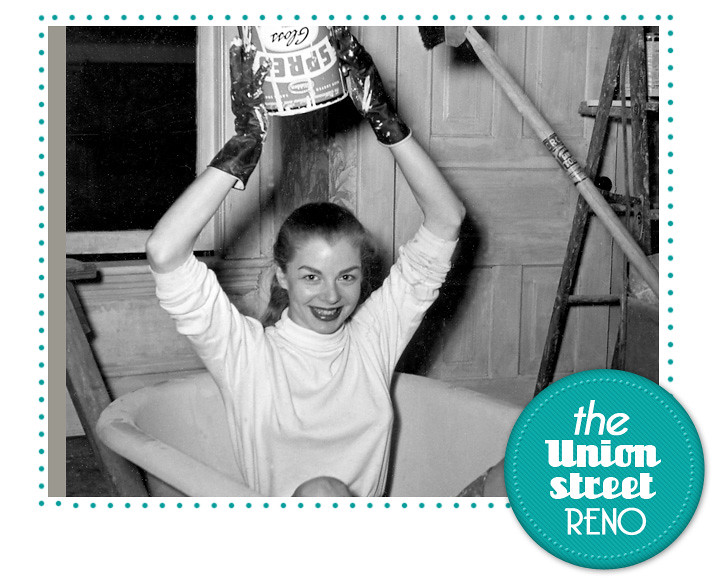
Joey's Mom: Renovating Union Street


I took an inadvertent break from the Joey's Mom series the past few weeks, but we're back now!

Fueled by the success of the Barclay Street renovation, Joey's Mom and Jerry began work on expanding the house with a 2-story addition followed by renovating a property on Union Street.

I'll turn the story over to her now! As always, check out Joey's Mom's photos on flickr and see the rest of our Joey's Mom series here.


After our 1950 success with renovating the large bedrooms in his mother's house into small apartments, Jerry saw the wisdom of enlarging the building. There was space on the lot for a two-story addition that could add two apartments.

Jerry drew and re-drew the plans at our dining room table in early 1951. He had to factor in where the entrances to the new apartments would fall in the old structure. He needed to consider what effect blocking existing windows would have. The city demanded that we stay X number of feet from the lot line. I asked him to also bear in mind how the addition would look in that block of lovely historic houses.

His plan was masterful, really, in that he also thought about and planned exactly how a person would actually live in the small space. He provided for the maximum storage space possible. His plan then needed only an architect to validate it before putting it out for contractor bids.


Having built a two-story addition and finished renovations of our Barclay Street rental property, we knew our calling and purchased this building on Union Street. It had endured a bad changeover in the past from a large single-family house into a four-unit. We re-did it, committing sins with abandon. Natural woodwork was painted over; this clawfoot tub undoubtedly wound up in a landfill.

The newspaper heard of our work and published a glowing account of the young couple moonlighting evenings and weekends, and ran a story on our renovation projects. "By the way, we're having a home improvement contest; you should enter," the reporter advised.


We immediately planned to enter the newspaper's home improvement contest and mapped our strategy. Jerry drew up plans to demonstrate how we moved walls, redesigned smaller, tighter kitchens to add more space to the livingroom/bedrooms, constructed built-ins around a jutting chimney to hide it, etc. We took before and after photos along the way.


We documented our work photographically as renovation of the Union Street building progressed. We planned to enter the Grand Rapids Herald's Home Improvement Contest.

Installing these small square bathtubs saved space. Jerry handily applied plastic tile around them, creating roomy shower stalls for those who chose not to soak.

This was about the time "little Ricky" was born. We rushed home from work early on "I Love Lucy" nights to catch the show.


We took photos of each other in the finished apartment to include in our contest entry.

We were now preparing our contest entry with before and after photos, drawings of old and new floor plans, and a little story of explanation. We bound it all in a leatherette cover.


I bought a red celluloid device at the camera store to assist in making a montage to sum up our work on the apartment. Joey chose this one from among the different combinations I created, maybe because of the good action photo of Jerry in the center and his enthusiastic work at the table saw. I like it too.

On the Saturday night before the contest winners were published, Jerry and I talked of our certain win.

In the morning we went out for the Sunday paper, smiling knowingly at each other. We spread the Sunday feature section on the dining room table.

Astoundingly we didn't win first prize. A homeowner who had replaced a big old octopus furnace did. A photo of the winning entry showed a basement with a furnace. Period. No good lighting effects. No beaming owners. Really dreary!

Our eyes skipped to the second place winners. Not us. Third place. Same. Desperately we perused the honorable mentions. We were missing.

There wasn't much conversation that Sunday. But somehow we got over it. Life was busy and eventful; we moved on and put the contest that dominated our lives the summer of 1952 out of our minds.

It wasn't until 55 years later, while re-examining the leather-bound entry book and reading the newspaper announcement of actual winners, did it hit me like a brick. The basement-improvers and others who won were true homeowners. We were commercial landlords. We were homeowners making good improvements, but not on our own home.

Jerry, in your current home in heaven, please take comfort.


If you're new to Owl Really, welcome! Please check out my favorite posts and consider subscribing! :)

Wednesday, March 7, 2012

Joey's Mom: Renovating Barclay Street


We're back with another post in our Joey's Mom series! After Joey's Mom and dad were married, his boss at the barbershop generously offered to give up his apartment for the newlyweds. In the housing shortage post WWII, this was a big sacrifice to make and Joey's Mom theorized that Mr. Ripmaster didn't want to lose his star barber.

The enterprising newlyweds got to work renovating the Barclay Street house, turning the upstairs into separate apartments. Jerry and Joey's Mom did most of the work themselves on nights and weekends. You can read below about their work on the house and stay tuned for more fun renovating stories from Joey's Mom on a second rental property - including photos taken for a DIY contest they entered!

Below, Joey's Mom shares about the experience of renovating Barclay Street!


Our life was now constantly work, work, work, but with we did it with relish! Day jobs, then a quick Kewpee oliveburger, then evenings at Barclay Street. Days off and Sundays too. We weren't having a lot of fun but we committed a lot of "sins." Most of them consisted of painting over beautiful old wood!


Our tenants could walk into an apartment with a suitcase of duds and start living. Electricity, heat, and water were "on," and we provided furniture and window coverings. Above, Jerry updates a good sturdy chest found in the building.


Our combined skills got the job done. Jerry's knowledge of carpentry expanded daily as he worked. He was the better of us to draw plans from scratch when we built new. I was quick to visualize how to renovate the old: where heat runs could come up from the basement through the first floor, where we could fit in a bathroom, etc. I "invented" a 3-foot-by-9-foot bathroom that took only a narrow slice off a former large bedroom to create an entire apartment.


While Jerry did most everything himself, he didn't hazard the intricate plumbing maneuvers necessary for this job. Ed the plumber was a customer of Jerry's at the barbershop who agreed to do the work. When the bill came later, Jerry was surprised and angry. Litigation ensued. I learned a lesson from the sidelines: Have a clear understanding up front, preferably in writing. The knowledge served me well later in contracting work on my own, as I purchased buildings and renovated them in Lansing and East Lansing.


Jerry continued to hone his cabinetry skills on this building. Such small amounts of space for complete apartments almost dictated built-ins, and they were the rage in the 1950s anyway. Here Jerry designed and built space for clothing in deep drawers and cupboards, while to the right he hid a chimney behind bookcases and shallow cupboards.


Jamie here: We see these kind of renovations all over "blogland" these days and it's so fascinating to know this DIY culture is not a recent phenomenon! I love peeking into Joey's Mom's world! Want to see more? Check out Joey's flickr stream!

If you're new to Owl Really, welcome! Please check out my favorite posts and consider subscribing! :)

Thursday, February 23, 2012

Joey's Mom: The Southern

Joey's mom spent a lot of time at a restaurant/club called The Southern. It started out as a small barbecue stand and grew significantly over the years. She worked there before her marriage to Jerry and after they were married, they socialized there quite often. Below, she tells us more about the club.

It all began with Hank, a boyfriend from my first summer in Grand Rapids after high school graduation in 1946. During that carefree summer of first liberation from parents and home, Hank and I spent many of our nonworking hours with Dotty, my housemate, and her date Chet, my brother. At some point a light went on and Hank said, "You girls should be working at the Southern!" He told us it was a nightclub in a southern suburb, a decent place with good clientele where waitresses could do well. Both his parents had worked there for years. His father, Dave, was the head chef, and his mother, Marian, was maitre d'. He said he could ask them to set up an interview for us with the owners.

About a week later Dotty and I sat at a shiny black-topped table in a booth near the kitchen of the Southern. Over coffee with the owners, Esther and Herb Kaiser, we talked about possible jobs there. It was not a place of casual employment, they stressed. Some of their waitresses had been with them for years. They asked about our lives and backgrounds, and told us we'd be entering a family into which we should fit in. Pay would be $2.50 per night, plus tips. It was a given that we would work Friday and Saturday nights. Other nights, or all day Sunday, could be scheduled according to our preference and their need.


Soon we were measured for uniforms -- definitely not Playboy-bunny style -- and we gave notice at our jobs. One thing we liked about the new job was that we were now within walking distance of work. Another benefit was the good dinner prepared by chef Dave and served to us when we reported to work at 5. This was a real plus since our kitchen at Miss Daame's, our Dutch schoolteacher-landlady, was minimal. The club closed at 1 a.m., and we could expect to walk out by 2.


The Southern "family" included band members Jerry Van Huizen on piano and John Degi on drums. Jessie, the vocalist, was a younger sister of owner Esther Kaiser. The customers loved her and called her away from her hostessing job to come sing.

Jerry Van Huizen was also a talented vocalist, and his Dutch name played very well in a city heavily populated by Dutch immigrants.


Before marriage, dancing is what Jerry did. When I first saw "Saturday Night Fever," I thought, "I've lived with this family!" Jerry WAS John Travolta, living to dance, and doing it to perfection. While we were engaged and I was working Saturday nights, he continued to go out to dance, and it seemed perfectly natural! Hard to believe that he would want to marry me, the non-dancer. He had to teach me from scratch. He would take me on quiet weeknights to a small place with a dance floor and a juke-box, and hold me closely to help me feel the music and his movements. It was slow going but he was patience personified, and eventually I began to get it. In fact, a year or so into our marriage I made him promise that any night we went to a restaurant, a party, or the theater, that we would end with a dance somewhere! I used my sister-in-law Dotty's birth certificate to obtain a liquor card so that we could go where we pleased. But here we are in August 1950, 3 years into our marriage, and I'm a legitimate 21, grown-up, married, and able to dance.


If you're new to Owl Really, welcome! Please check out my favorite posts and consider subscribing! :)

Thursday, February 16, 2012

Joey's Mom: Barclay Street - The Beginning

Every Thursday, we're visiting with Joey's Mom. She tells many tales on Joey's Flickr stream, but our story will begin with her leaving the roominghouse she shared with Dotty (when Dotty married Joey's Mom's brother, Chet) and moving into the house on Barclay Street where she rented the maid's room. The house on Barclay Street was bought by Jerry with his Army savings in order to provide for his mother, Josephine, and his youngest brother Tony.

Joey's mom tells intriguing stories and her re-telling of moving into 119 Barclay Street and meeting Jerry for the first time is great. Read below and see more on Joey's Flickr stream.


Photo and commentary by Joey's mother

After graduating from high school in 1946, I worked and attended business school in Grand Rapids. A recent best friend, Dotty, became engaged in the fall to my brother, a returned serviceman. Since Dotty was my roommate, my brother Chet felt responsible for helping me locate a place to live on my own. He rented a room for me in this house in Heritage Hills, just blocks from Davenport College and the bus stop to my workplace. I had a private room and access to the bathroom and kitchen used by the Italian family that owned the building -- young landlord Jerry, his mother, and Jerry's teenage brother.

Entering the spooky, cold, and dark house at 2:30 a.m. on my first night in early December after the nightclub stint, and feeling my way from the front door all the way to the upper-rear maid's room, was an experience to remember. Fitting in with the family for my important use of the kitchen came next. But the young are adaptable. At 18 I was nearly a blank slate, and just took what came, and it became my life. Actually the family regarded me as a novelty and a good addition to their lives.


Mama didn't resent my presence in the kitchen, as I feared, which made me move cautiously in her realm at first. I asked the teenager to clear a half-shelf for me in the refrigerator, as no defined area was mine. The whole thing needed a good sanitizing. I did it gradually and no one complained. Emboldened, my Dutch Cleanser arm inched out, scouring teensie cupboard areas at first, then whole shelves, finally a whole cupboard, like a spreading plague of Clean. Then I attacked the indescribable range, temporarily setting to the side the simmering red sauce. Mama appeared briefly, smiled slightly, and disappeared.

Jerry purchased the Italianate style house with his Army savings after World War II. His father was about to divorce his mother, and helped Jerry turn the upstairs (except for my "maid's room") into an independent apartment. It was rented immediately due to the housing shortage. You can see the added wooden fire escape stairway required by law. Jerry then moved his mother and younger brother away from the Italian ghetto off South Division Street to this "new" house. There was ample room for the three of them on the main floor as the rooms were large. The living room on the front had a working fireplace with a white marble mantle above a graceful arched white marble fireplace opening. The dining room was large, with leaded-glass cabinets along one side. I remember inviting a date over for dinner one night, and I entertained him at the table under a huge chandelier with many lights. On each arm, just before the electric bulb, there was a jet operable by thumb and finger. We turned the valve. The jet hissed. My date struck a match. Voila! Gas light. We then lit 'em all. A yellow splendor and a fire hazard. Perhaps at the time the electric chandelier was added folks didn't believe that electricity was really here to stay and wanted a fallback.


Because of our busy schedules I lived in the house for about a week before ever meeting Jerry. He worked in the barbershop 8 to 6. I arose late, went to classes, worked a 90-minute lunch-hour job at the Mug 'n' Muffin, and headed by bus to the Southern for late-afternoon dinner set-up and arrived home at 2:30 a.m. The Southern couldn't be counted upon for enough work nights to get me by financially, so I worked the dinner hour on my “off” nights at the Bird and Bow on Division Avenue. It's no wonder Jerry and I seldom collided.

Our first meeting was brief. Seated at the kitchen table, Tony introduced us at dinnertime as Jerry hurried out for a bite to eat before dancing, his nightly routine. He told me later that what he remembered was my posture at the table. What I remembered was that one of his shirtsleeves was ironed and the other wasn't. A short time later we met again in the kitchen. He asked me if I danced, and I admitted not knowing how. He answered that we could take in a movie some time. Our first date! Then he began popping into the kitchen frequently. He proposed a modest restaurant downtown. Another movie. I began finding penciled notes on the kitchen table when I got home from work, hoping I'd done well on tips, did I have any call* customers. Sometimes the landlord himself was waiting, invigorated from a night of dancing.

And so it went. Tony and Mama were pleased about everything. One night, trying to study under the chandelier in the gloomy dining room, I watched Jerry out of the corner of my eye, polishing the dark wood floor for his mother. I thought, "This is a very nice man." Of course Tony led him up to my room one evening to show off the decor. Maybe Jerry thought "This is a very nice girl." In late March he produced a "Keepsake" diamond ring in a jeweler's box.

Joey here. I asked my mom what a "call" customer is. She emailed this explanation to me: "Call customers were those who specifically asked for a certain waitress. Management took heed of girls who were favored thus by customers, and it was a coup among the waitresses too. Sometimes it resulted in a better tip because you paid special attention to customers who asked for you. Further, you weren't waiting in rotation for a customer."


If you're new to Owl Really, welcome! Please check out my favorite posts and consider subscribing! :)

Thursday, February 9, 2012

Joey's Mom: An Introduction


I was scouring Flickr for images of real vintage interiors when I came across Joey Harrison's Flickr stream and the beautiful images he uploaded on behalf of his mom.

Joey's mom studied photography and worked diligently to perfect her craft. Most of the uploaded photos are from her marriage to Joey's dad, Jerry. I loved peering into her world as a newlywed and living a vintage life vicariously through her. Her photos are beautiful (especially her self-portraits) and the accompanying stories are enchanting.


Joey was kind enough to tell us more about his mom and his experience of uploading her photographs and sharing them with the world. Over the next several weeks, we're going to dive into Joey's mom's world and learn more about her life and talent. (Joey's mom likes to keep her anonymity, so we will refer to her as Joey's mom throughout the series.)

Tell us a little about yourself and your mom.

My mom grew up poor on a Michigan farm with her parents, a sister and three brothers. Various foster children boarded with the family over the years, and a girl slightly younger than my mother was adopted. My mom’s mom documented their life on the farm with her Brownie camera − not especially skillfully or artistically – but she no doubt influenced my mother’s later pursuit of photography.


The Depression left a lasting impact on my mother, forging lifelong habits of frugality and likely played a role in her tremendous personal ambition.

My mother married my father one year out of high school. Their only child − me − came at the end of their seven years together. My mom remarried a few years later and gave birth to two girls.

During the time my parents were married, my mom worked for the neighborhood doctor, who allowed her to set up a darkroom in his office. My father worked as a barber just a few doors down the street. Together, they had a second career developing property and renting apartments. During my mom’s second marriage, she created a small real estate empire piece by piece, doing as much of the work as she could and contracting what she couldn’t. She eventually owned around a dozen properties − single-family homes, duplexes, and some multi-unit buildings.


How did she learn photography and is she still an avid photographer?

My mother is mostly self-taught, though she did get assistance from helpful staffers at various photo stores in Grand Rapids. She also belonged to a serious photography club for about a year.

Once my sisters were born, her passion for photography took a back seat to child-rearing and managing her properties. She was extremely organized, efficient, and energetic. When I think back on those years, I remember her constantly on the move: meeting prospective tenants, making clothes for my sisters, cooking and cleaning, painting walls, gardening, dealing with contractors. The demands never let up, and neither did she.

During all that time she continued to take photographs of family activities. Darkroom work was reserved for once-yearly marathon sessions creating handmade Christmas cards. Her photographic ambitions were no longer artistic; she simply wanted to document her family and, later, her travels.


Did you grow up knowing she had a stash of amazing photographs and stories, or was this treasure trove a recent discovery?

She kept most of her black & white prints in a drawer in the basement. I was quite familiar with most of them and fascinated by the world they depicted because that world was the family I was born into but which disintegrated before my memories began. So I didn’t look at them as an outsider might; their great value to me was personal. Many years later I began to see how skilled and creative she was, and what a distinctive photographic style she had.


Was she immediately on board with the idea of posting her photos online along with stories?

Not at all. I had to coax and prod. She was very busy with her various activities and insecure enough to imagine that others would not be interested. As the months went by, the number of views and comments picked up rapidly, and as they did, her engagement with the project intensified.

Did you discover something new about your mom in the process of gathering her photographs and stories?

Yes, there were some stories I’d never heard, and I’m always happy to find these missing puzzle pieces. But I’m not sure any number of photos or stories would completely unravel the mystery of their marriage. It’s mysterious to me because it all took place before my memories kicked in. I was still an infant when my parents split.


Which is your favorite photo and story?

Picking a favorite photo is difficult. There are probably a dozen that I might call my favorite depending on which day you ask me. Today I’d say it’s the one below because it depicts the happy marriage that I want to believe in. It shows them collaborating (creating the photo) and having fun doing it. And it showcases my mom’s craft and artistry.


Is your own photography influenced by your mother’s?

Stylistically not so much. We have different eyes and different aims. But her interest in photography was hugely influential. When I first got serious about photography, I had no idea what I wanted to shoot or what I thought was a good photograph. I simply wanted to do what she had done: take photographs and assemble a body of work. She also passed along a visual gene, if such a thing exists. From the time I was a child, I was someone who looked at the world with wide, wondering eyes. It was all so very interesting − and still is. As I got a little older my critical skills began to develop. This thing is exceptionally interesting; this thing is not. And the things that struck me as interesting seemed worthy of preserving photographically.


Self Portrait


I am pleased to bring you more of Joey's mom's photography and her beautiful stories in the coming weeks! Stay tuned for "Joey's Mom Thursdays" each week. :)

If you're new to Owl Really, welcome! Please check out my favorite posts and consider subscribing! :)