Thursday, April 12, 2012

Joey's Mom: Photography


Have you wondered how Joey's Mom developed her love of photography? We find out below!

If you've missed any of our Joey's Mom series, see them all here and click through the photos to see more and to read the original versions of her stories.


This could just as well have been captioned "Our Wedding Night or How a Bad Photo Resulted in a Lifetime Hobby!"

Jerry's German camera turned out maddeningly random good or bad photos. Of course it was because we didn't know about setting it for distance, let alone shutter speed and f-stop. We posed this morning after our wedding in front of the hotel where we spent the first night of our married life. The picture turned out so badly I was motivated later to take the camera back to a store to learn how to operate it and was sold a light meter. The rest is history: the beginning of better photos and a lifetime hobby.

(Read a very classy and humorous story about the wedding night here!)


Mom's First Darkroom

In the late 1940s, we purchased a light meter to use with the folding German camera Jerry brought home from World War II, and it improved our photos. I took one or two informal little evening classes on photography at a camera shop, furthering my interest and ability.

Then one day Jerry said he met a man through business, Roger Verspuit, who had a darkroom and we were invited to watch him develop and print photos. We went and observed. Seeing images appear in the tray in the reddish darkness sent me reeling. My heart was pounding; I HAD to do that! Approximately 12 hours later I bought my basic darkroom needs. Those items are with me and usable still, having rotated from me to son and back again, first with my own attention taken by children and husband, then Joey's move to digital camera and Photoshop.

My employer, the neighborhood physician, did business in a large old brick mansion. The main floor had a big bathroom in the back adjacent to our pharmacy room. The tub had been removed, the room had a smooth maple floor, a telephone jack, and of course running water! As though planned for my use, there was a walk-through closet to the room from our diathermy suite, providing a light lock. After a quick OK from my boss I used a handy old porcelain-top table for the developing trays and contact printer, and placed the safety light on a towel bar over the trays. The office was flush with brown medicine bottles, and I saw their potential for Dektol, etc. I may have emptied some prematurely.

Holding a book in one hand and concentrated solutions from the camera store in the other, I mixed the magic potions in my little room of miracles. Then, feeling goose-bumps of anticipation, I would read a paragraph under the safelight, expose the paper to negative, and quickly consult the book again. Dunk paper in developer, watch images appear, then transfer the photo to acid stop and fixer, poking the book under safe-light with shaking hands after each step those first few times. It was exciting and thrilling beyond imagination!

Aside from Roger's evening demonstration, there was never another lesson or help. Later, I joined a prestigious camera club, which furthered my interest and honed my skills.

I never saw Roger Verspuit again. His little act of kindness and darkroom hospitality set in motion satisfying hobbies for at least two people. Wherever you are, Roger, I salute you!


My darkroom quickly evolved from a temporary enamel-topped table setup to a real counter 10 feet long with black inlaid-linoleum top. Black-lined drawers held photo paper. Cupboards above kept chemicals neat. The counter was built at desk height so that I could sit while printing. Jerry did it all. A stenographer's chair allowed me to scoot from printer or enlarger to tray to tray to tray. Jerry was teaching himself woodworking as I was learning photography. Since I didn't notice anyone teaching him, maybe he was holding a book in one hand while sawing with the other! However he did it, he became an expert and the doctor didn't mind having nice cupboards built into his back room.

I painted the room a dark rosy red and made traverse draperies of black to cover the one window. It was a warm womb for long Saturday afternoons with the Met playing softly on the radio. I totally lost track of time with the birthing of amazing black-and-white photos. Each was a miracle, over and over again. I'm as fascinated with them today as I was 56 years ago.

The 4x5 I am pulling out of the fixer in the photo above showing a gal in her black bra, was Rose Bottegal, the wife of Jerry's Army buddy Aldo. He and Rose visited us in 1949, and while on the water in a rowboat on a steaming day, Rose shed her blouse. Wearing just her bra, she said "Just make believe this is a swimming suit top."


The doctor loaned me his Argoflex until I purchased my own camera. An artist himself, he painted in watercolors and oils at an easel in his wife's sunroom. So he followed my development in photography with interest.

Here the doctor edits 16mm film he shot on an extended summer vacation driving from Michigan to the West Coast with his family on Eisenhower's emerging interstate highway system. Of course they visited Yellowstone Park.


Camera store personnel in the 1940s were photographers. A customer could expect to have a serious conversation with a salesperson regarding any of the products offered from film to cameras of any price, lenses, enlargers, developing chemicals, floodlights, tripods, anything they sold. They could discuss technique and their advice was solid; they lived and breathed photography. A store was apt to have an old hobbyist or two passing time, entering conversations between clerk and customer, and offering advice as well, usually good!

The owner of Fuson's store had been a well-known portraitist, teaching his skills to his daughter who then probably surpassed him. He introduced her to me in his store one day as he explained the different surface textures of photographic papers, the tones, the contrast numbers, et cetera.

Evelyn added her own take on certain papers, we chatted and eventually she told me about a new camera club she was forming, to be for serious hobbyists. I was interested and became part of the group which we democratically voted to name the "Camera Art Club." The club was to provide a great deal of help and inspiration to this budding photographer. Evelyn especially was generous about sharing her knowledge. She demonstrated how to take a portrait if only one photoflood was available. I went home and posed Jerry. This photo, taken in 1949 became one of my favorites of him.


I invited the Camera Art Club to Hickory Hill, my parents' farm, in August 1950. It was no longer a working farm, but the photographers fanned out and found interesting possibilities in my childhood swing, old farm machinery, and rustic fencing. My mom and dad were gracious but unobtrusive, and no one suggested they do an American Gothic pose. The day was overcast and without sparkle, not consistent with our usual luck in the weather.

The darling Chicago model was only 13 years old (so says my 56-year-old pencil jotting on the back of the print).


The Camera Art Club hired Jerry and paid him the standard modeling fee of $25 for an evening's work. He was cooperative and seemed to enjoy the group -- and they him. This is the photo I took that night in 1950.


If you're new to Owl Really, welcome! Please check out my favorite posts and consider subscribing! :)

Wednesday, April 11, 2012

Favorite Finds: Kirsty's Card Catalogue


I had the pleasure of meeting Kirsty in 2010 when I did my second flea market. She and our mutual friend Rachel organized Nashville Handmade and graciously allowed vintage dealers to set up as well! Kirsty is an amazing handmade artisan and also decorates with vintage items, so I knew she would have a great Favorite Find and she did not disappoint! She details it below!


What is your favorite find and where did you find it?

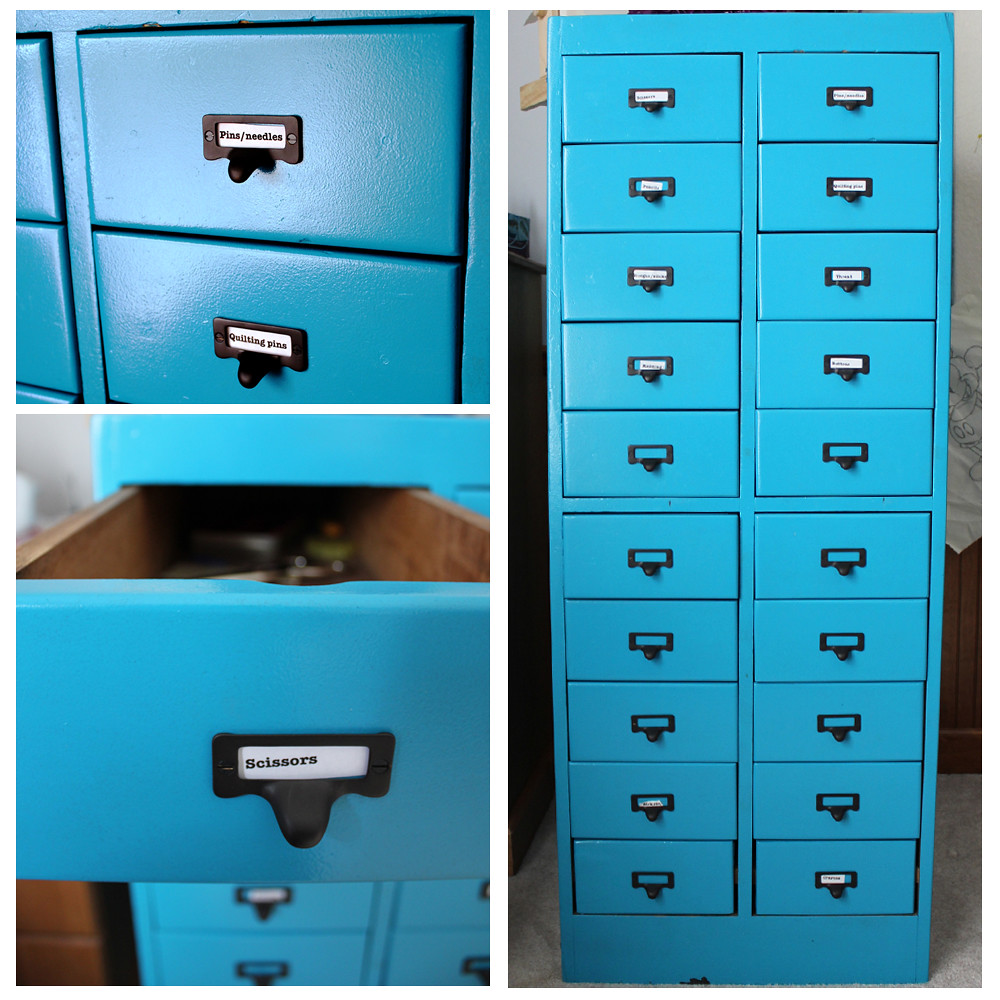
It is an old card catalogue and it was found on Craigslist after some intensive searching. It's not your typical library card catalogue, as the drawers are a lot bigger.

What were your first thoughts - did you know right away you were buying it and repurposing it for craft supplies?

When I first saw it I knew it would be perfect for the purpose of storing my craft supplies away from little fingers.


Did you have to do any restoration or repairwork?

It did require a lot of work, all the draw handles were horrible, and needed replacing. The whole thing had to be sanded, and painted (it was a terrible dirty dark green originally). I also had to sand the inside of each drawer, the previous owner had stored greasy car parts in it.

Any other details we need to know?

If you look at the photos you can tell how tall my toddler is! Originally every drawer had a label, but he has slowly been removing them, luckily he hasn't worked out how to open the drawers!

Why do you love buying vintage and secondhand?

I love buying vintage and secondhand (and also handmade) because it all has a story, it's well built and you are helping the environment too.

WOW! I admire Kirsty's perseverance and patience in restoring this card catalogue - although it IS the holy grail of thrift finds! What a beautiful piece, thank you for sharing!!!
If you're new to Owl Really, welcome! Please check out my favorite posts and consider subscribing! :)

Tuesday, April 10, 2012

DIY: Make a Dress!

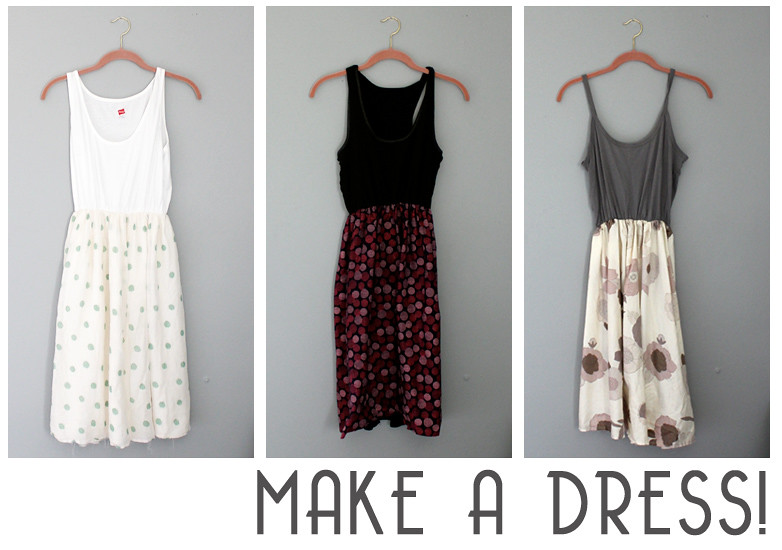
Pinterest tells me that 9 weeks ago I pinned this pin that shows how to make your own dress from fabric and a tank top.

It's so, so easy and I became so, so obsessed! I have made 5 dresses so far - here are my 3 favorites.


I have plans for many more- I just gotta find the hour to carve out and focus! I have learned a lot along the way - be sure to enclose your hems so the fabric doesn't fray - OR just use the selvage at the bottom of your skirt and then you don't have to do anything!

All the tank tops are cheapos from Wal-mart ranging from $3-$4! The first skirt fabric was $1.50 a yard at our new Wal-Mart, the middle dress is made from fabric from JoAnn, and the third dress is made from thrifted fabric that I've had for years!

This is such an easy way to make affordable dresses! I love them!


If you're new to Owl Really, welcome! Please check out my favorite posts and consider subscribing! :)

Monday, April 9, 2012

Thrift Report: Bags and Frames and Linens!


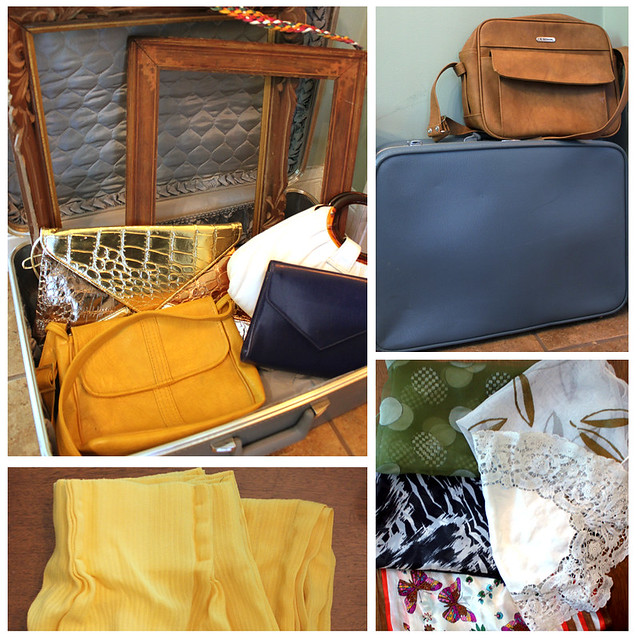
I had some time to swing by Goodwill this week and picked up some items for the booth! Two cool frames, a multi-colored woven belt, assorted handbags, a carry-on brown bag, and a blue suitcase! Plus, assorted scarves/hankies, and some awesome yellow curtains!


Everything will be headed to the booth later this week!

If you're new to Owl Really, welcome! Please check out my favorite posts and consider subscribing! :)

Sunday, April 8, 2012

Happy Easter - and a New Dress for Beth!

I hope you have a wonderful Easter! I am not very eloquent when it comes to matters of faith, but I am so very thankful for salvation, grace, love, and hope.

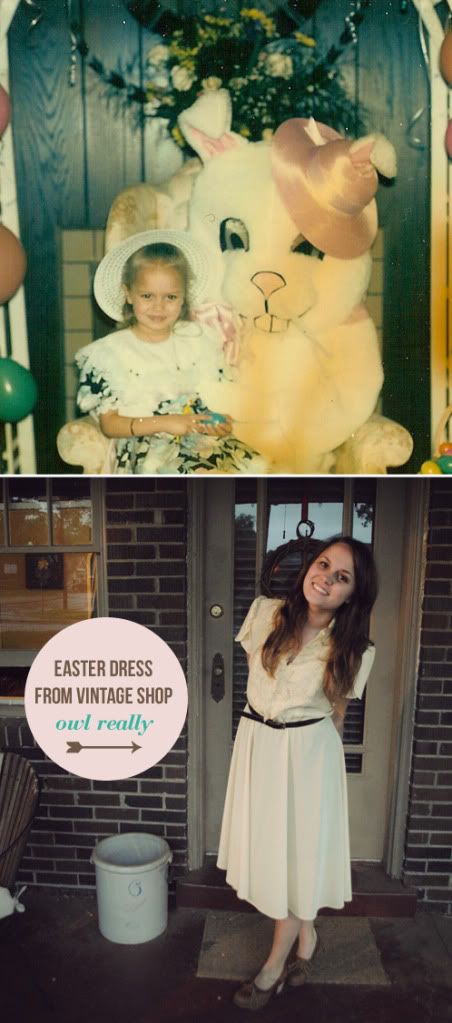
On a lighter note, please check out Beth Mathew's new Easter dress! In December, I learned from the mall owners that a man bought a yellow dress from my booth as a gift for his significant other. I didn't know any details other than that, but I was delighted to find out that the dress went home with two of my neighbors, Dan and Beth Mathews! (I must brag on them for a moment - Beth is a very talented graphic designer and you may recognize Dan from last season of The Sing Off! He is a very talented musician!)


Beth posted Friday about her new dress and had such amazingly kind things to say about my booth. Check out her blog - she writes about a range of fun topics and her creative mind organizes new information in such fun, graphic ways! I love getting a glimpse into how she sees the world! (Kinda like on 30 Rock when we see from Kenneth's point of view that everyone is a muppet!) I love her infographics and how she translates information into well-designed images.

Have a beautiful day!!

If you're new to Owl Really, welcome! Please check out my favorite posts and consider subscribing! :)

Friday, April 6, 2012

Fresh Air: Doris Day


Doris Day turned 88 this week and NPR celebrated by featuring her on Fresh Air. Listen to Teri Gross' interview with Doris Day here! (Such a treat since Doris Day rarely gives interviews these days!)

I think Doris Day is fascinating and such a great actress and singer. Sadly, Netflix only has one of her movies streaming (Pajama Game) so I think I will have to break out my 3-disc Doris Day/Rock Hudson set this week and watch my favorite, Pillow Talk!


If you're new to Owl Really, welcome! Please check out my favorite posts and consider subscribing! :)

Thursday, April 5, 2012

Joey's Mom: Dr. Pott

Each Thursday, we take a look back at Joey's Mom amazing photography and stories. Take a look at previous posts here!

Joey's Mom worked as an assistant to their local doctor, Dr. Pott. She tells how she got the job and details some of the adventures below. Please note that you can click the photo to view them larger on Flickr.


Jerry felt strongly about patronizing businesses in our neighborhood. So it is that we patronized the new doctor who set up his office nearby upon his return from World War II duty. His office building was a former residence in the Italian villa style — very similar to Jerry's Barclay Street house. It was just three doors east of Jerry's business and five or six doors from our apartment above the Unclaimed Freight Store.

A few months after settling into marriage, a commotion on the street below our apartment sent me to the front bay windows. I saw the aftermath of a collision, the arrival of police, bystanders clearing the way for the doctor carrying his black bag, traffic backing up on the business street (which was also a state trunkline), and folks running up to gape. I didn't recognize the doctor. It was not unusual that he was summoned because his office was nearby, and emergency rooms weren't part of the culture to the extent they are now. Of course no one had a cell phone to call for an ambulance either. A good thing. They were often owned by funeral directors.

On a later day the doctor knocked at our apartment door at mid-morning. "Remember me? Dr. Pott? I did your marriage blood tests." He said my husband approved his asking me to mind his telephone that day as his assistant hadn't appeared and he was swamped.


A day's tryout turned into years. In fact, my job with Dr. Pott roughly coincided with my marriage to Jerry. I think Jerry snapped this photo after work one day when I showed the office to him and pretended to receive a call.

Work began easily, with ample time to treat each of the neighborhood patients with care. The charge was almost always $3, and nearly everyone paid in cash. Dr. Pott always had a fat roll of one dollar bills in his pocket. Those who "charged" received a statement in the mail, which I hand-typed on a small portable typewriter at the beginning of each month.

The doctor taught me how to give injections, take blood pressure, assist with minor office surgery, give diathermy treatments, take basal metabolism tests, do urine analysis tests for sugar and albumin. Most patients appeared with a bottle of urine and all was faithfully tested; patients would telephone the next day for a report.

In spare moments Q-tips and swabs were handmade, bandages prepared, the rubber gloves were powdered. The regular routine upon arrival in the morning was to sterilize the needles, syringes, and any instruments from the day before and boil the used rubber gloves. Little was disposable at that time. As the test tubes of urine bubbled, I would do a quick dusting of the waiting room and doctor's desk, arrange the magazines Mrs. Pott had sent over (The New Yorker and House Beautiful), then vacuum through all of the rooms pulling a bullet-shaped Electrolux. Everything would be ready when the doctor arrived at 10, smelling of ether from doing morning surgery.

During the first years we didn't do appointments, and patients simply waited their turn. The waiting room was the large living room of the former residence, furnished with chairs all around.

In the early days there were periods when no one was waiting, and Dr. Pott and I had time to chat. Our favorite topic was the patients. We saw them until 5 every day, plus Monday and Wednesday evenings and Saturday mornings. The doctor made home visits after office hours. If he needed my assistance on a house call he would schedule it for Saturday afternoon when the office was closed.

Some of our patients enjoyed going to the doctor; they kept a regular bill going and dropped by periodically to pay on it in cash, usually $1 bills. They felt a real friendship with the doctor, and we with them. It was a social occasion for them, and they were also keeping themselves tuned up.

Of course the doctor treated serious conditions of all kinds: cancer, gall-bladder disease, diabetes, heart problems, syphilis. If appendicitis were diagnosed, the doctor hurried to the hospital behind the patient. Folks injured in nearby auto accidents were brought in from the street for stitches and bandages. A diagnosis of pregnancy eventually resulted in the delivery of a baby.

The job had many attractive features, and one was being able to wear a uniform. It meant no daily panic over costume choice, and much less drain on the budget. I didn't like practical "nurse shoes" however, and the doctor never complained that I substituted high-heeled white pumps. I was on my feet all day. No wonder I have problems now.


The good-looking doc decorates this room as much as the handsome wallpaper and furnishings selected by Mrs. Pott. The loveseat he occupies here in his office at mid-century is lipstick red.


The heavy black bag was the doctor's icon. When opened and unfolded, a plethora of pills and treatment devices was revealed. Upon entering the office, the doctor's first act was personally replenishing his bag. Then he would don his "office shoes" for a long day on his feet. This worn pair must have been super-comfortable. Patient after patient presented their problems at intervals averaging 12 minutes, I once calculated. I marveled at his concern for each, his stamina, and his unflappability. When he left the office the shoes were kicked off and the black bag went home with him. He was never without it outside the office.

While the Potts were in Amsterdam, I mailed this still life to him at his kinfolks'. He told me it was a great hit, and he seemed really pleased.


In 1952 the doctor and his wife went to Europe for a month.

I kept regular office hours during Dr. Pott's summer away. I earned my keep by refilling medicines, taking blood pressures and performing other routine procedures. Allergy shots could be continued on schedule and weight-loss patients assessed and re-supplied with their amphetamine fixes. (Yes, in common use at the time! I worked there long enough to observe that, though it didn't work long-term.) Young Dr. Humphrey came in on certain days for patients requiring heavy-duty treatment.

We planned a re-do of his medicine room that summer during his absence. Carpenters built new cupboards, and I sanded and painted them.


The many, many plywood doors and drawers had to be sanded and painted three times. I was not a beer drinker, but on this hot day it's no wonder I sank into a corner with a cold beer “borrowed” from the stash of Miller’s High Life that I left for the carpenters in our little office refrigerator.

The floor and backsplash of black marbleized linoleum was a style of the times, and practical, we hoped. The chrome finishing strip on the counter’s edge was of that era too.


The carpenters, Bob and Roland Wysorek, were a joy, as neat and precise in their work as they appeared themselves.

Our medicine room had been the kitchen of a two-story brick Italianate residence built in the late 1800s on East Fulton Street in Grand Rapids, Michigan. The original kitchen had one wall of cupboards; a roll-rim sink hung on another. The old cupboards were filled with bottled pills and gallon-size bottles of liquid medicine. The drawers were stuffed with medicine samples bestowed by salesmen. Injectables and drugs were kept in the metal cabinet with a glass door that could be locked, but never was. Although in full view of the windows, we never worried about a break-in.

The Bunsen burner on the counter held test tubes of urine that were cooked to detect albumin. Gas to power the burner came from a line formerly leading to the kitchen range. The original counter had been crudely constructed to get the office up and running when the doctor came home from his WWII Army duty and began his practice. Now Bob and Roland would replace it with a real counter and cupboards above and below.

The upward-tilted dowels on the board above the sink were used to hang rubber gloves to dry after being boiled. Disposable gloves were not in general use yet.

The doctor's microscope was mounted on the small square table, with an electric bulb underneath shining light upward.

A large map of the city hung just above the chair near the back door. I well remember Dr. Pott consulting it before heading out on house calls in those pre-OnStar days.

The doctor encouraged me to turn the adjoining bathroom into my darkroom, where I spent many Saturday afternoon hours. Sometimes my photographic tools mingled with the tools of the doctor. The black roller hanging above the sink is a print roller. After laying my freshly washed prints on ferrotype plates, I rolled them to create a glossy surface.


Jamie here! Medicine has changed so much in the past 60 years, hasn't it? I am purposefully leaving off with a tease about Joey's Mom's dark room because that will be the subject of next week's post! :) Stay tuned!

If you're new to Owl Really, welcome! Please check out my favorite posts and consider subscribing! :)